
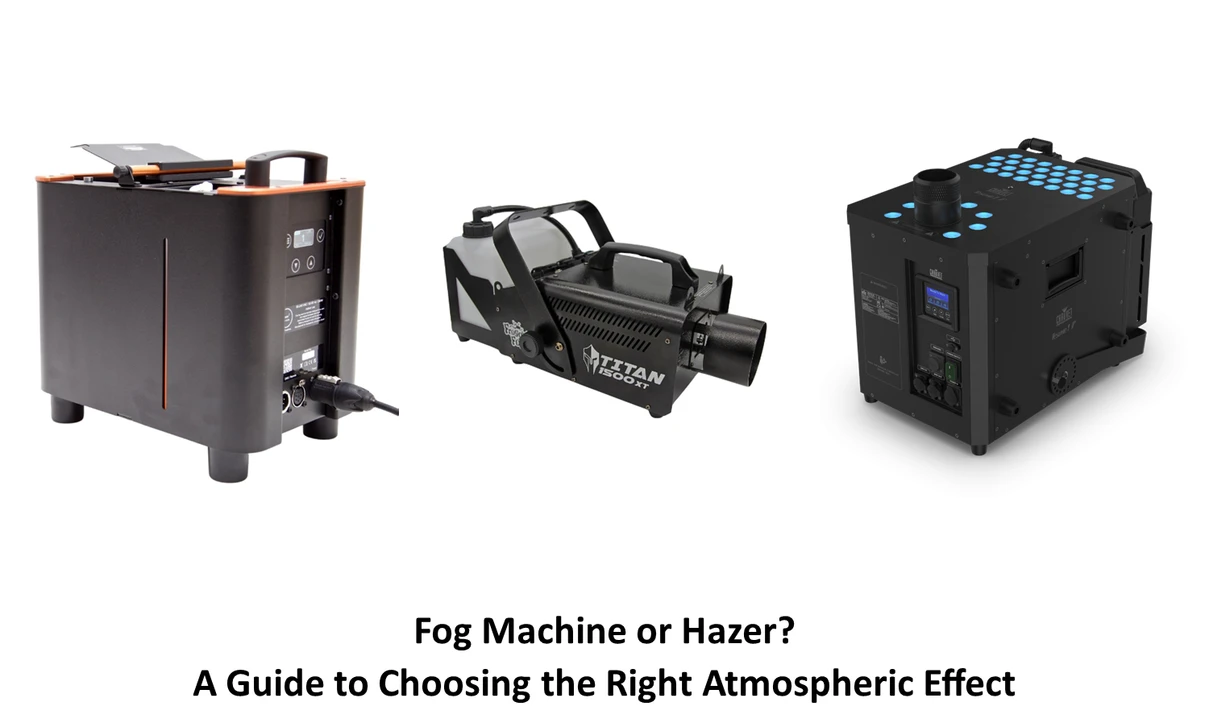
Choosing the right fog machine, hazer or atmospheric fluid can be complicated, especially if this type of equipment is new to you. Atmospherics—foggers, hazers, snow machines, bubble machines and more—can add the pop of magic that really makes your event or show special. Choosing the right equipment for your needs can be complicated, especially with so many choices available. Here’s a quick guide to help you choose what will work best for you. (We’ll stick to hazers and foggers for now!)
START WITH THE DESIRED EFFECT
Before choosing a machine, think about what you are trying to accomplish.
Want to make beams of light visible throughout a room? A hazer is probably your best choice.
Want a dramatic cloud of fog? A fog machine is likely the better option.
Want fog that creeps along the floor? You’ll need a low-lying fog solution, which can be created by chilling the fog or using specialized low-lying fog fluid.
Want a sudden burst of white vapor? A CO₂ effect may be the right choice.
Once you know the effect you want, you can start looking at the equipment that will produce it.
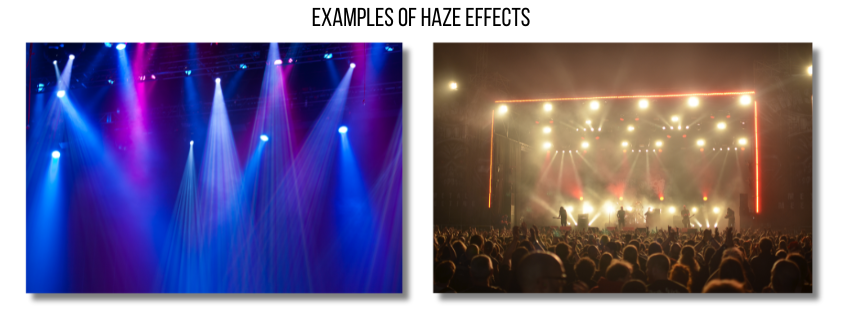
- Subtle, continuous and relatively even atmosphere
- Allows beams of light to be visible without fully “fogging” the room
- Often used at concerts and for scenes that need to look technical, edgy or atmospheric
- Can create the look of atmospheric haze on a hot, hazy or smoky day
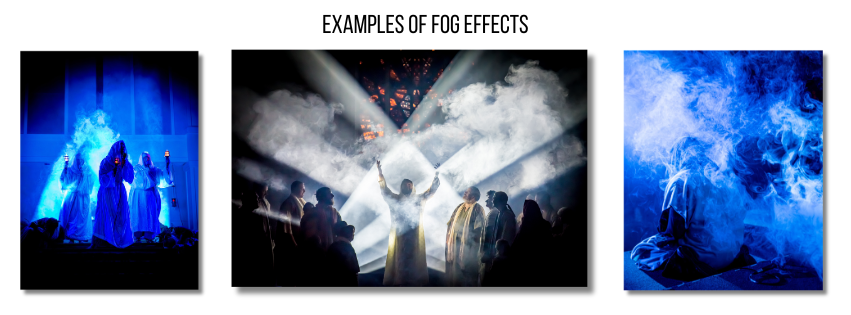
- Visible, dramatic effects
- Can be low-lying (like a graveyard) or fill a room (like a foggy evening or smoky fire)
- Often used in theatre for dramatic effect, concerts and live events, or Halloween displays
- Can be used for short bursts or longer periods, depending on the machine and the desired effect
USAGE
As you are choosing your atmospheric generator, the next factors you need to consider are volume and consumption, type of control, noise level and maintenance.
Volume & Consumption
This means how much space you need to fill. Are you hazing an arena or a small stage? Are you fogging an outdoor haunted attraction over a large footprint or creating a special effect for a high school theatre production?
How much atmospheric output you need to produce to fill your room or create the desired effect will guide you toward the right machine. This includes considering how much fluid the machine can hold at one time and how quickly it consumes that fluid.
Look for specifications such as fluid consumption, output volume and recommended coverage or room size when those measurements are provided by the manufacturer.
You would choose a different machine to create short bursts of fog for a theatrical effect than you would for continuously filling a large venue with haze. The size of the space and the effect you are trying to achieve should both be considered when comparing machines.
Control
In most cases, you want to be able to trigger your machine at a specific time for a theatrical cue or on an “as needed” basis to add continuous haze to a space.
Many machines can now be controlled via DMX, the control language commonly used by lighting operators to control a show. DMX-controlled machines can be triggered from a lighting console or other show-control device.
For smaller spaces or simpler applications, a remote control may be all that is needed. Some remotes are wireless, while others are wired directly to the machine. Other machines offer timers, interval controls or onboard controls for standalone operation.
Another important “control” factor is how long the machine takes to heat up for proper operation. This time can vary greatly, so if you need an “instant” cue, you will need to factor in the warm-up time of the machine.
Choosing the right control method—and understanding how quickly the machine can respond—is a critical factor in determining which machine will work best for your needs.
Noise Level
All atmospheric machines will make some noise. The noise comes both from the motor or fan of the machine as well as the physical output of the fog or haze—the “hiss” of the release.
You may want to consider how noise will affect your production. Noise probably isn't an issue if you are using a hazer to fill an arena, but it can become critical during a quiet moment in a small theatre when the hiss of a fog machine could distract from the performance.
There is no such thing as a completely noiseless atmospheric machine, but some are quieter than others. Look for decibel ratings when they are available, and consider where the machine will be positioned in relation to the audience and performers.
Maintenance
ALL atmospheric machines need regular maintenance and cleaning!
Fluid residue can accumulate over time and may affect performance, particularly if a machine is used heavily or stored without proper cleaning. Most manufacturers provide recommended cleaning procedures, and some offer cleaning or maintenance fluids specifically designed for their machines.
Cleaning instructions can usually be found in the manual that accompanies each machine. Following the manufacturer's recommendations is the best way to keep your equipment operating properly and extend its useful life.
More expensive machines may also include onboard diagnostics to monitor output and machine efficiency. Some are designed with serviceable components to make maintenance and repairs easier over the life of the machine.
Easy, ongoing maintenance is an important consideration when choosing your atmospheric generator—especially if the machine will be used frequently.
Another key factor in properly utilizing your atmospheric machine is choosing the correct fluid.
Brand
Many manufacturers recommend specific fluids for their machines, and using the manufacturer's recommended fluid is usually the safest choice for performance, compatibility and warranty coverage.
However, some manufacturers produce fluids that are designed to be compatible with a range of machines. Some even offer “fluid finders” where you can enter your machine model and receive the manufacturer's recommended fluid options.
Read the manual carefully! Using an incorrect fluid can affect performance and, in some cases, may void your warranty.
And one important note: fog fluid and haze fluid are NOT interchangeable! Make sure you are purchasing the correct fluid for your particular machine.
Ingredients
Atmospheric fluids may be water-based or oil-based, depending on the type of machine and the desired effect. They may also be scented or unscented.
You should be able to find a Safety Data Sheet (SDS) for each fluid. The SDS provides information about the fluid's ingredients, handling, storage and safety considerations.
Many modern atmospheric fluids are water-based, although oil-based formulations are also used for certain applications. The fact that a fluid is water-based does not, by itself, determine whether it is appropriate for a particular machine or environment. Always follow the manufacturer's recommendations and review the fluid's SDS.
Size
Fluids may be purchased in sizes ranging from small containers to 55-gallon drums.
Consider your volume of use—and your freight charges—when choosing the correct quantity. If you use a large amount of fluid, buying in bulk can make sense.
Some atmospheric machines are also designed to connect directly to a large container of fluid, minimizing the need to stop and refill the machine during an event or performance.
Special Fluids: Low-Lying Fog
For fog effects, the scene designer often wants the fog to “creep along the ground.”
This effect can be achieved in several ways.
- Keep the fog cold. This could mean using a chiller box, a specialized low-lying fog machine, or a dry ice fogger. Dry ice foggers are very effective, but they require a supply of dry ice and additional handling considerations.
- Use low-lying fog fluid. Specialized low-lying fog fluids are designed to help fog remain closer to the floor without requiring the same chilling equipment. Some are designed specifically for indoor use, while others are better suited to outdoor applications such as Halloween attractions.
The “cold” method is tried-and-true and can be extremely effective, but if that equipment is too expensive or cumbersome for your application, low-lying fog fluid may provide a simpler alternative.
What About CO₂?
CO₂ jets are a specialized atmospheric effect rather than a traditional fog or haze machine. They produce dramatic, fast bursts of white vapor that are especially popular for concerts, festivals, dance performances and other live events.
Because CO₂ effects behave differently from fluid-based fog and haze, they require different equipment, operating procedures and safety considerations. They are generally chosen when the goal is a short, highly visible burst rather than creating sustained atmospheric haze.
If you're considering a CO₂ effect, make sure you understand the equipment and safety requirements for your specific application before choosing a system.
SO… WHICH ONE IS RIGHT FOR YOU?
There isn't one “best” fogger, hazer or fluid for every application. The right choice depends on the effect you want, the size of your space, how often you will use the machine, how you want to control it, how much noise you can tolerate and how much maintenance you are willing to perform.
And don't forget the fluid! The right fluid is just as important as the right machine.
If you're not sure what you need, that's okay. Tell us what you're trying to accomplish, where you're using it and what kind of effect you want to create. We can help you sort through the options and find an atmospheric solution that fits your show, event or venue.
From concept to curtain call, we're here to help. LiveChat us or email info@goknight.com for assistance.